
What Makes Commercial Cleaning Different for Manchester, NH Businesses?
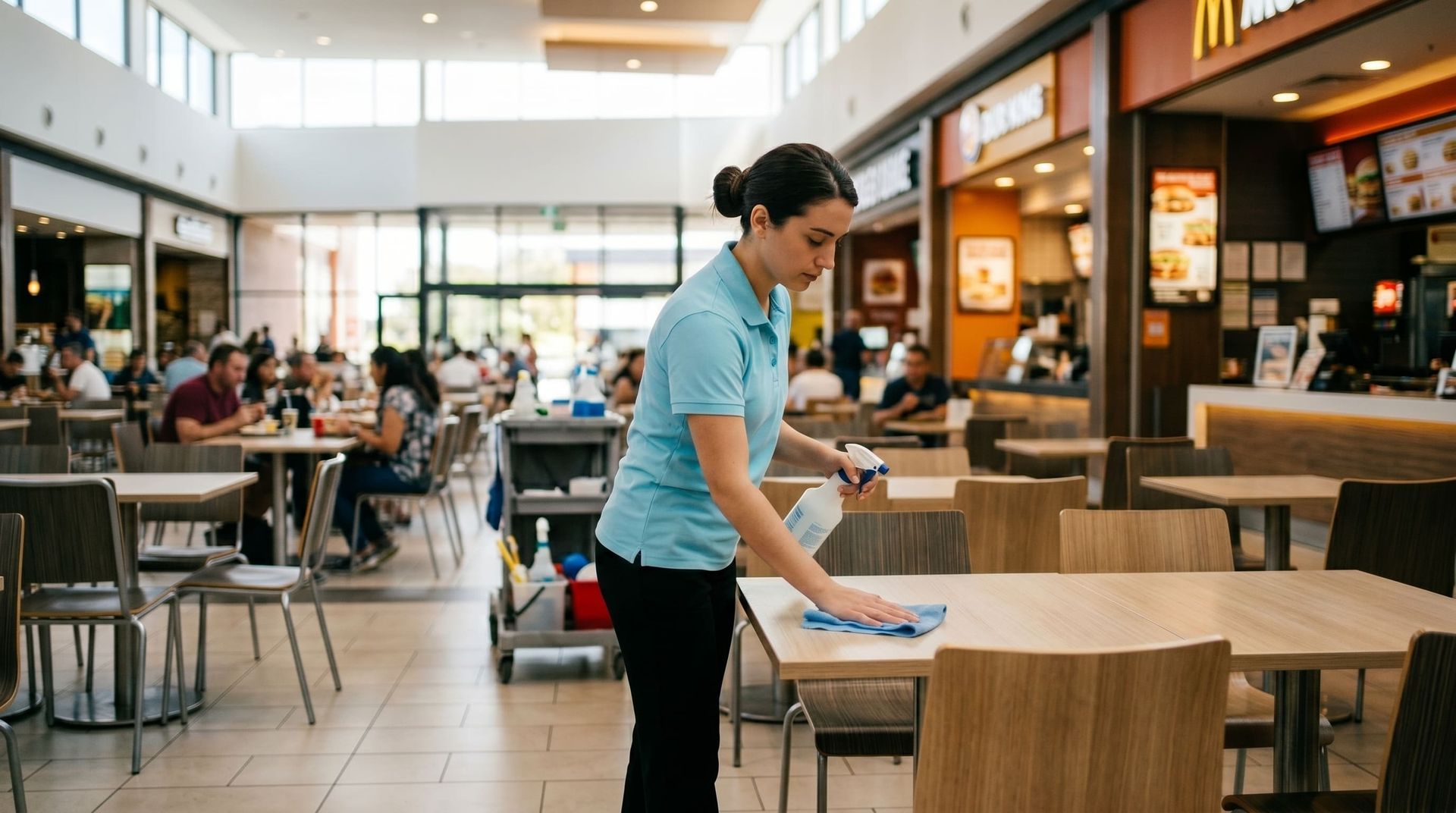
From Historic Millyard Buildings and Busy Elm Street Businesses to Healthcare, Manufacturing, Downtown Events, and New Hampshire Winters, Manchester Has Cleaning Challenges You Will Not Find in Every City
Manchester is a city where the building next door can have a completely different story from yours.
You might be working in a renovated brick mill along the Merrimack River, a professional office downtown, a restaurant near Elm Street, a medical facility, a retail business, or a modern manufacturing operation somewhere else in the city.
Those properties may only be a few miles apart, but cleaning them the same way would not make much sense.
Manchester's economy now includes technology, healthcare, advanced manufacturing, biofabrication, professional services, restaurants, entertainment, and other industries. At the same time, the city continues to invest in downtown, offices, housing, transportation, and new development.
At Manchester Commercial Cleaning, we believe the best cleaning plan starts with understanding the building itself.
How old is it?
Where do employees enter?
When are customers coming through?
Which restroom gets used the most?
What happens when it snows?
Those details tell you much more than simply knowing how many square feet need to be cleaned.
The Millyard Makes Manchester Unlike Most Cities
You cannot really talk about Manchester without talking about the Millyard.
The massive brick mills along the Merrimack River were once part of the world's largest textile manufacturing complex. Today, many of those historic buildings have been transformed into offices, technology companies, educational spaces, restaurants, and other modern uses.
They are beautiful buildings.
They can also be interesting buildings to clean.
A renovated mill might have:
- Exposed brick
- Tall ceilings
- Large windows
- Historic woodwork
- Exposed pipes
- Beams
- Deep window ledges
- Older flooring
- Open office layouts
Dust has plenty of places to settle.
You can vacuum every floor and empty every trash can, but if dust has been collecting along beams and high ledges for months, the space can still feel dirty.
That is why historic commercial properties often benefit from a combination of regular janitorial cleaning and scheduled detail work.
Old Buildings and Modern Offices Create an Interesting Combination
One of the things we like about the Manchester Millyard is that the inside of a building may feel completely different from what you expect when you see the exterior.
You walk through a century old brick building and suddenly find yourself inside a modern technology office.
That creates two different types of cleaning needs in the same space.
The historic parts of the building may require attention to brick, ledges, corners, and architectural details.
The modern office may have glass conference rooms, shared workspaces, electronics, polished floors, and employee kitchens.
Neither is particularly difficult when the cleaning plan accounts for both.
Problems usually start when the same basic checklist is used without considering the building.
Downtown Manchester Has a Different Daily Rhythm
Downtown Manchester is not only an office district.
People come downtown to work, eat, attend events, visit businesses, meet with professionals, and spend time in the city.
Manchester's economic development office describes a downtown that is continuing to grow, with upgraded offices, new housing, entertainment, festivals, sports, and other activity bringing more people into the city.
That means a downtown business can have several different busy periods.
The morning may bring office workers.
Lunch brings restaurant traffic.
Afternoon appointments continue.
Then evening events bring another group of people downtown.
For a customer facing property, cleaning sometimes needs to happen between those busy periods instead of only after everyone leaves.
Elm Street Businesses Are Making First Impressions All Day
A storefront, restaurant, professional office, or service business along a busy downtown street has a simple problem.
People are looking at the building while they are using it.
A glass door covered in fingerprints at 2 p.m. is visible to every customer who walks in afterward.
A restroom that needs attention cannot always wait until the evening.
Neither can an overflowing trash container or a drink spilled near the entrance.
That does not mean somebody needs to clean constantly.
It simply means certain areas deserve a quick check during the day.
Those usually include:
- Entrances
- Restrooms
- Customer floors
- Reception areas
- Glass doors
- Trash containers
- Waiting areas
- High touch surfaces
Sometimes ten minutes at the right time can make a bigger difference than another hour of cleaning after closing.
Downtown Cleanliness Is Already a Community Priority
Manchester has been putting additional attention into the appearance of downtown itself.
The city's Streetplus Ambassador program works throughout the downtown area on cleaning, maintenance, trash removal, graffiti removal, leaf cleanup, and winter snow clearing. The city reported in August 2026 that the ambassadors had collected more than 140,000 pounds of trash since the program began and had spent nearly 400 hours on snow removal over two years.
That tells you something about downtown Manchester.
Cleanliness matters to how the area feels.
For individual businesses, the same principle applies on a smaller scale.
The sidewalk may be clean.
The street may look good.
But once someone opens your door, the responsibility for that first impression shifts to the business.
New Hampshire Winter Comes Through the Door With Everyone Else
Manchester may not have Minnesota winters, but New Hampshire certainly gives commercial buildings plenty to deal with.
Snow is only the beginning.
There is also:
- Road salt
- Sand
- Slush
- Water
- Wet entry mats
- Dirty parking lots
- Snow covered sidewalks
A commercial entrance can look completely different after fifty people walk through it on a snowy morning.
The challenge is what happens next.
Someone walks through the salt near the doorway.
Then they continue down the hall.
Another person follows.
Before long, a problem that started in a six foot entryway has spread through the building.
Winter Cleaning Is Mostly About Stopping the Spread
You do not necessarily need to clean an entire Manchester office more often because it snowed.
Usually, the smarter approach is to put more attention where the weather is entering.
That may include:
- Main entrances
- Employee entrances
- Entry mats
- Vestibules
- Carpet near doors
- Hard flooring
- First floor hallways
- Salt buildup
- Wet areas
Keep those areas under control and the rest of the property becomes much easier to maintain.
It is much simpler to remove salt near the front door than after it has traveled through three hallways and into the break room.
Do Not Forget the Employee Entrance
This is something larger businesses often overlook.
The beautiful front entrance might have twenty customers use it during the morning.
Meanwhile, seventy employees came through the side entrance between 7:30 and 8:30.
Which entrance really needs more cleaning?
Probably the employee door.
On a snowy day, everyone may be walking across the same salted parking lot and following roughly the same route through the building.
A good cleaning plan pays attention to where people actually walk, not where the nicest entrance happens to be.
Manchester Offices Usually Get Dirty Slowly
Office cleaning is not normally dramatic.
There is no moment when everyone suddenly realizes the building became dirty.
Instead, small things happen.
Coffee gets spilled near the machine.
Dust settles around computer monitors.
A few crumbs end up underneath the break room table.
The conference room door gets fingerprints.
Trash cans slowly fill.
Carpets collect dirt from the same footsteps every day.
Monday still looks pretty good.
Tuesday too.
Then Friday afternoon arrives and something feels different.
That is why consistency matters.
Regular cleaning keeps small problems from having enough time to become noticeable.
The Break Room Is Usually Where the Workday Leaves Evidence
If you want to know whether an office was busy, check the break room after lunch.
Coffee has been made.
The microwave has been working overtime.
The refrigerator door has been touched all morning.
There are probably crumbs somewhere.
Someone left a little water around the sink.
None of that means employees are messy.
It means employees are using the room.
A practical break room routine can include:
- Countertops
- Tables
- Sinks
- Appliance exteriors
- Refrigerator handles
- Cabinet pulls
- Floors
- Trash removal
- Frequently touched surfaces
Customers may never see the break room.
Employees see it almost every day.
Their experience matters too.
Manchester's Healthcare Businesses Have Different Priorities
Healthcare remains an important part of Manchester's economy, and the city's current economic development efforts specifically identify healthcare alongside technology, advanced manufacturing, and other growing industries.
A medical environment has a different rhythm from a traditional office.
Patients arrive throughout the day.
Family members may come with them.
Waiting rooms turn over.
Restrooms are used frequently.
Employees move between spaces.
In appropriate areas, cleaning may focus heavily on:
- Waiting areas
- Reception spaces
- Offices
- Restrooms
- Staff rooms
- Flooring
- Common areas
- Frequently touched surfaces
People visiting a medical office may already have plenty on their mind.
A clean, orderly environment is one less thing for them to think about.
Manchester's Manufacturing History Is Still Alive, Just in a Different Form
Manufacturing did not disappear when the textile mills stopped operating.
It changed.
Manchester's current economic development strategy highlights advanced manufacturing and emerging industries alongside technology, healthcare, and biofabrication.
Those facilities can create an entirely different cleaning environment from downtown offices.
A manufacturing or industrial property might have:
- Administrative offices
- Production areas
- Warehouses
- Shipping and receiving
- Employee entrances
- Break rooms
- Restrooms
- Conference rooms
- Customer areas
Cleaning all of those spaces the same way would be inefficient.
Larger Facilities Should Be Broken Into Cleaning Zones
Imagine a Manchester manufacturing facility with a nice front office and a large operation behind it.
The reception area needs to make a professional impression.
The employee break room might be one of the busiest spaces in the building.
The warehouse has completely different traffic and dust.
The shipping area has its own debris.
Those spaces should have separate priorities.
Customer Areas
Focus on entrances, reception, glass, customer restrooms, conference rooms, and appearance.
Employee Areas
Focus on break rooms, employee entrances, staff restrooms, workspaces, and common areas.
Operational Areas
Focus on appropriate floor cleaning, dust, debris, shipping activity, and the facility's specific requirements.
One building.
Three different cleaning environments.
Restroom Cleaning Is More About People Than Square Footage
A restroom might only take up a tiny portion of a commercial property.
That does not mean it requires very little work.
A small restroom used by fifty people can need more attention than a conference room ten times its size.
The important question is:
How many people use it?
As restroom traffic increases, so does:
- Water around sinks
- Trash
- Supply use
- Mirror spotting
- Floor cleaning
- Fingerprints
- Paper debris
- Odor concerns
For a small office, one regular cleaning may be plenty.
For a restaurant, medical office, large employer, retail property, or event related business, someone may need to check the restroom during operating hours too.
Events Can Turn a Normal Day Into a Very Busy One
Manchester continues to attract visitors for concerts, festivals, sports, entertainment, and outdoor recreation, something the city's 2025 economic report specifically highlights as part of the local economy.
For nearby restaurants, hotels, retail stores, and service businesses, that can mean unpredictable traffic.
A quiet afternoon becomes a busy evening.
A restaurant fills earlier than expected.
More people use public restrooms.
Trash fills faster.
Foot traffic increases.
A business does not need a completely different cleaning contract every time there is an event.
It helps to have enough flexibility to adjust.
Maybe the restroom gets another check.
Maybe trash gets emptied before the evening crowd.
Maybe the front glass gets cleaned again.
Small adjustments can keep a busy day from looking like a busy day.
Manchester's Outdoor Side Comes Into Businesses Too
Manchester is not only streets and old mill buildings.
The city manages 47 parks, and local recreation includes trails, lakes, golf, skating, skiing, and other outdoor activities.
The Heritage Trail also follows sections of the Merrimack River, including a paved Riverwalk through the Millyard.
That outdoor activity is great for the community.
It also means people are moving between outdoor spaces and commercial buildings throughout the year.
Spring mud comes inside.
Summer dust and pollen come inside.
Fall leaves come inside.
Winter brings snow, salt, sand, and moisture.
A commercial property does not exist separately from its surroundings.
The floors prove that every day.
Spring Creates a Different Cleaning Problem
When winter finally ends, the cleaning does not suddenly get easier.
Now all that snow begins melting.
Parking lots stay wet.
Sand from the winter reappears.
Rain comes through.
Mud gets tracked indoors.
The entrance still needs attention, but for completely different reasons.
That is why a Manchester cleaning plan should be flexible by season.
Winter may require more salt removal.
Spring may require more mopping and carpet attention.
Summer can increase dust and pollen.
Fall means leaves and wet debris.
There is no rule saying January and July need identical cleaning schedules.
Historic Buildings Need Periodic Detail Cleaning
This is especially important in Manchester.
Older buildings tend to have more places where dust can collect unnoticed.
High ledges.
Brick surfaces.
Window frames.
Pipes.
Beams.
Trim.
Older heating elements.
Deep corners.
These areas usually do not need to be cleaned every night.
They should not be ignored for six months either.
A rotating detail schedule can keep them under control without wasting time during regular service.
Modern Offices Have the Opposite Problem: Glass
Newer and renovated offices often use a lot of glass.
Glass conference rooms.
Glass doors.
Glass partitions.
Glass office walls.
It looks great.
Until people start touching it.
One fingerprint is nothing.
After a week of meetings, you may have dozens.
Glass is a good example of a cleaning task that should be based on actual use.
A conference room used several times per day may need frequent spot cleaning.
One used once a week probably does not.
More Cleaning Is Not Always Better Cleaning
A long checklist can look impressive.
It does not necessarily mean the building is being cleaned intelligently.
Imagine a cleaner spending fifteen minutes on an unused office while the main employee entrance is covered in salt.
Technically, another task got completed.
Practically, the cleaning time went to the wrong place.
For many Manchester businesses, it makes more sense to divide cleaning into different frequencies.
Areas That Often Need Frequent Attention
- Entrances
- Restrooms
- Break rooms
- Trash areas
- Customer spaces
- High traffic floors
- Glass doors
- Frequently touched surfaces
Areas That Can Often Be Rotated
- Baseboards
- High ledges
- Air vents
- Cabinet tops
- Interior glass
- Detailed floor edges
- Low traffic rooms
- High dusting
Everything gets maintained.
Just not everything every night.
Manchester Is Still Reinventing Itself
Reinvention is a recurring theme in Manchester.
The old mill buildings found new uses. Downtown continues to evolve. The city's current economic development work points to upgraded offices, new housing, emerging industries, improved transportation, and increased visitor activity.
Commercial buildings change too.
A business adds employees.
Another department moves in.
A restaurant becomes busier.
An office begins hosting more meetings.
A warehouse expands.
The building might not gain another square foot, but its cleaning needs can still change dramatically.
That is why it is worth asking occasionally:
Does our cleaning schedule still match the way we use this building today?
If the answer is no, you may not need more cleaning everywhere.
You may simply need more cleaning in the right places.
Commercial Cleaning for Manchester, NH Businesses
Manchester has one of the most interesting mixes of commercial properties in New Hampshire.
Historic Millyard offices sit alongside technology companies and modern workplaces. Downtown has restaurants, professional offices, entertainment, and customer facing businesses. Healthcare and advanced manufacturing remain important parts of the city's economy.
Those properties should not all have the same cleaning plan.
Manchester Commercial Cleaning provides professional commercial cleaning for offices, restaurants, medical facilities, retail businesses, financial institutions, schools, fitness centers, churches, warehouses, dealerships, manufacturing facilities, and other commercial properties throughout Manchester, New Hampshire.
A small professional office may only need service several times per week.
A busy downtown business may benefit from daily cleaning.
A manufacturing facility may need different schedules for its offices, employee spaces, and operational areas.
A historic Millyard property may need regular janitorial service combined with scheduled detail cleaning.
The best plan is the one that fits the building.
Frequently Asked Questions
How Often Should a Manchester Business Be Professionally Cleaned?
It depends on the type of facility, number of employees, customer traffic, and operating hours. Smaller professional offices may only need service several times per week, while restaurants, healthcare facilities, retail properties, large offices, and high traffic businesses may benefit from daily cleaning.
Do Manchester Businesses Need More Cleaning During Winter?
Often, yes. Snow, sand, road salt, slush, and moisture can significantly increase cleaning needs around entrances and high traffic floors. Employee entrances can sometimes become even dirtier than customer entrances.
Can Historic Millyard Buildings Require Different Cleaning?
Yes. Older commercial buildings can have exposed brick, beams, tall windows, ledges, trim, and other architectural details that benefit from scheduled high dusting and detail cleaning in addition to regular janitorial service.
Can Commercial Cleaning Be Done After Business Hours?
Yes. Many Manchester businesses prefer evening cleaning so the majority of the work can be completed without interrupting employees, customers, or patients.
Can Different Areas of My Building Have Different Cleaning Schedules?
Absolutely. In many properties, that is the most practical approach. Busy entrances, restrooms, break rooms, and customer areas can receive frequent service while quieter spaces and detail work follow a rotating schedule.
Need Commercial Cleaning in Manchester?
Manchester has spent generations changing what its buildings are used for.
Factories became offices.
Historic mills became technology and business spaces.
Downtown continues to evolve while healthcare, manufacturing, restaurants, professional services, and new industries keep bringing people into the city.
The buildings may be different, but they all deal with the same basic reality.
People create traffic.
Traffic creates dirt.
And New Hampshire weather usually adds a little more.
Manchester Commercial Cleaning can create a cleaning schedule around your facility, employees, customers, operating hours, and the spaces that actually get used the most.
The goal is not to make your building look like nobody has ever stepped inside.
It is to make sure that after a full Manchester workday, it still feels clean, comfortable, and cared for.